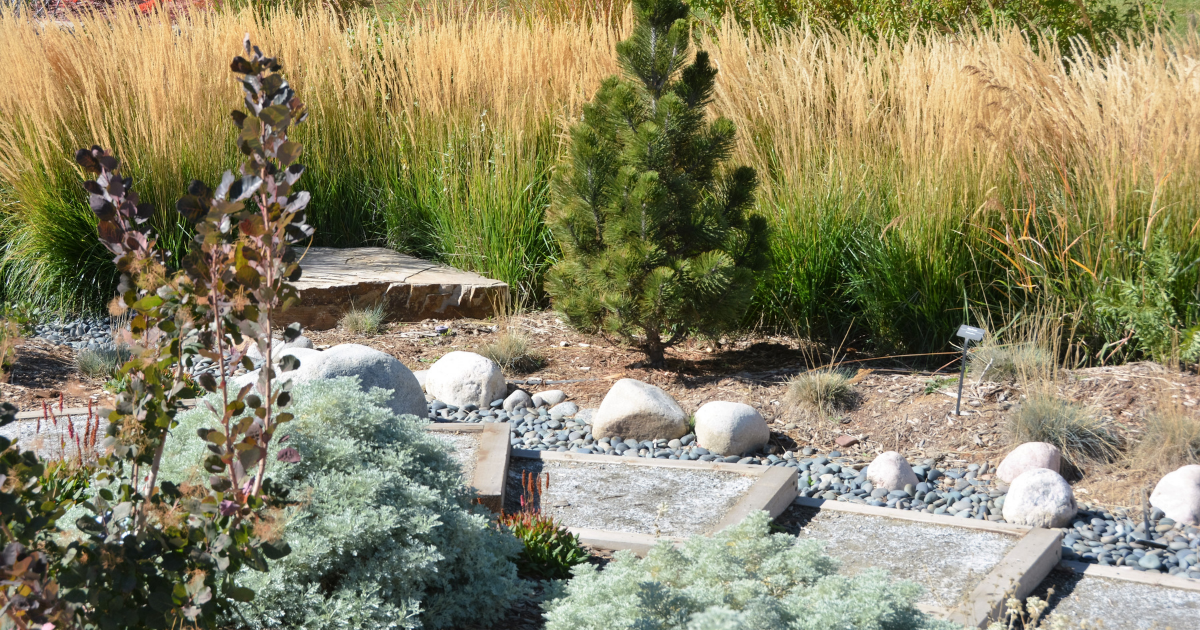
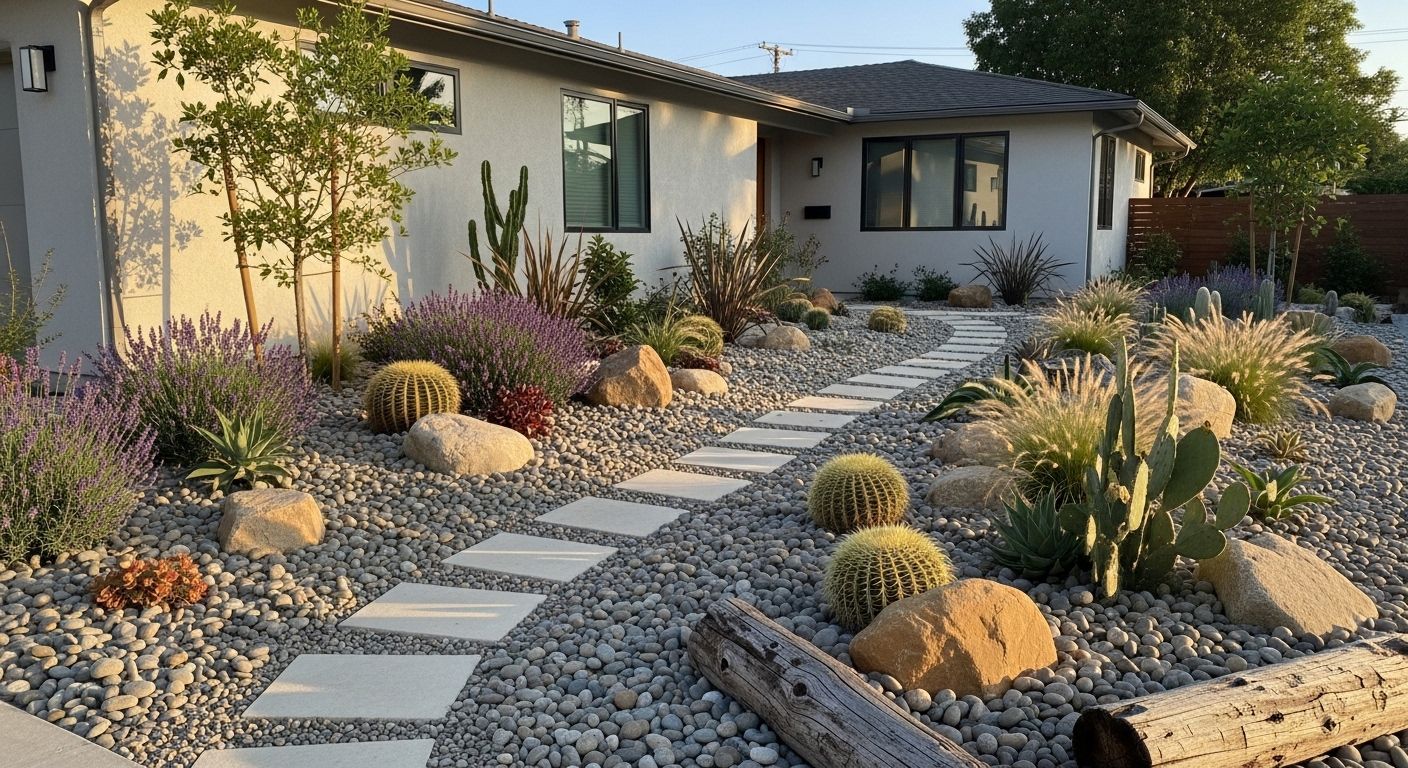
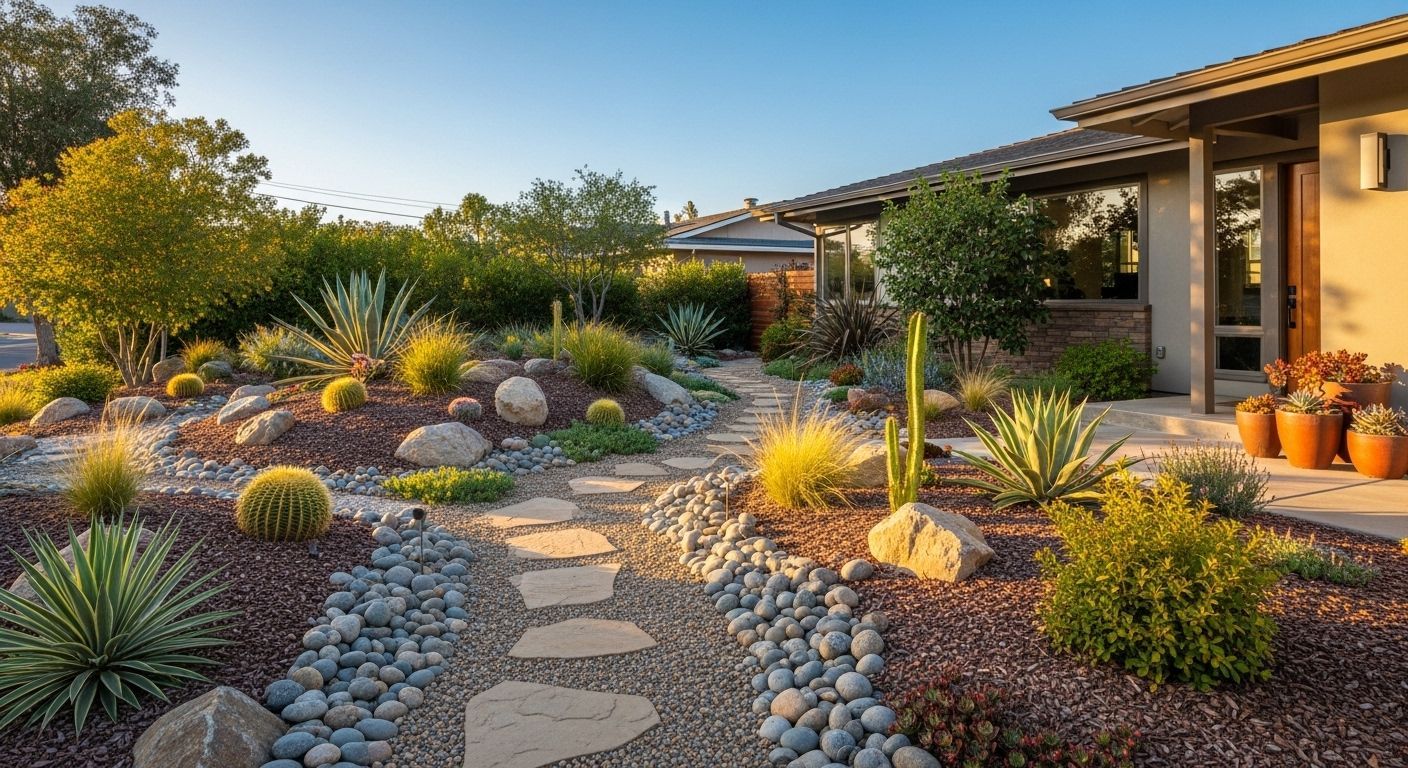
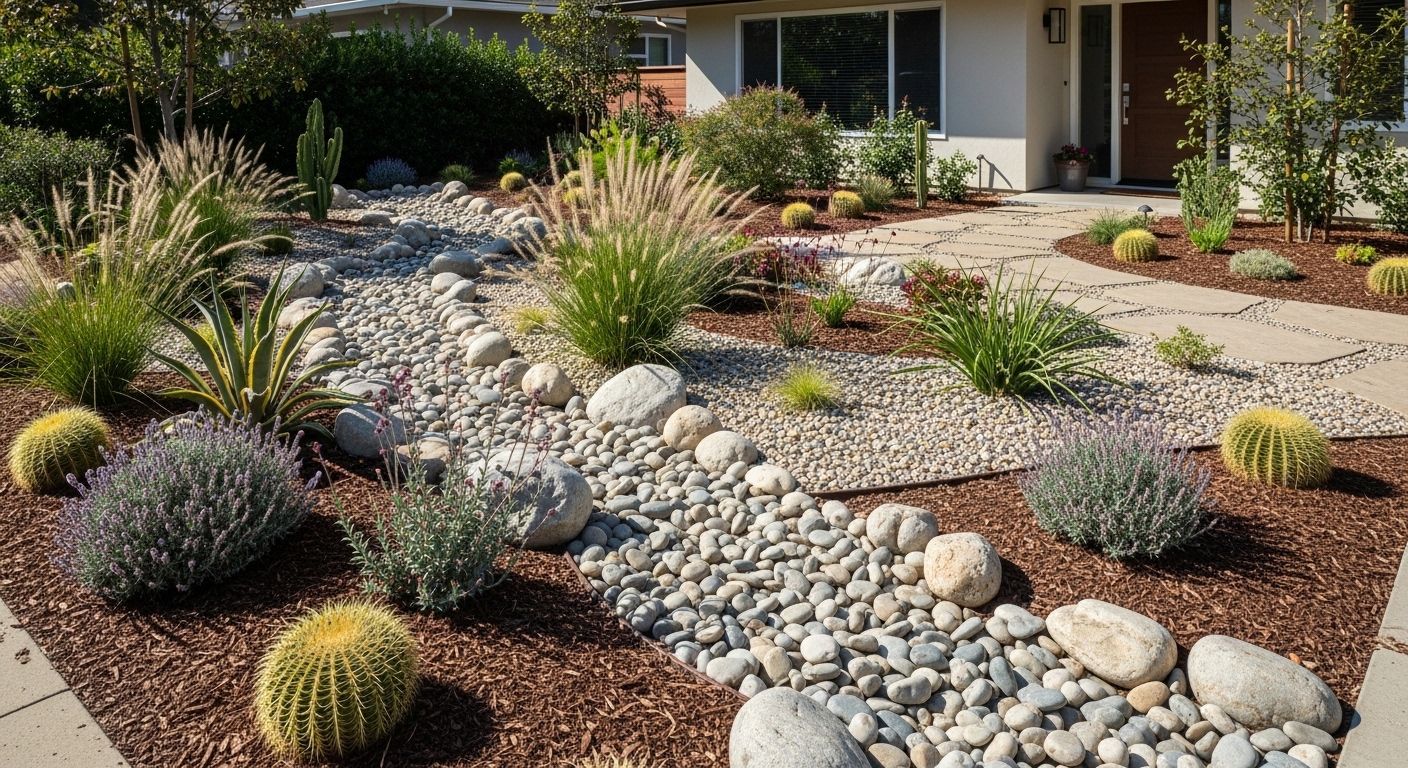
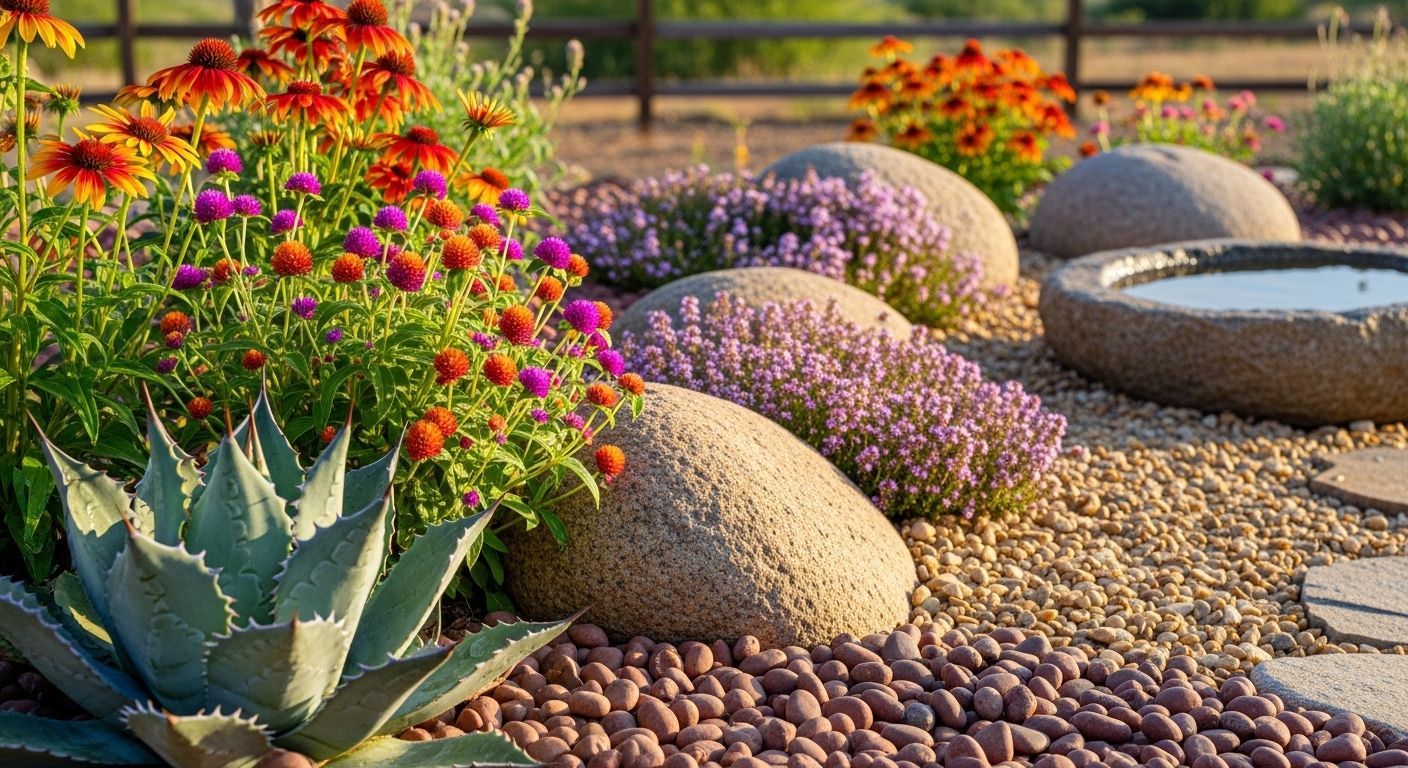
Lush native plant front yards take a different approach, layering drought-tolerant plants of varying heights, textures, and bloom times to create a front yard that shifts character week by week through the growing season. Blackfoot daisy, autumn sage, turk's cap, and native ornamental grasses planted in overlapping masses produce a front yard that carries color from early spring through late fall without the supplemental irrigation that conventional annual color programs demand.
Hardscaping is essential to a well-designed front yard native plant landscape. Decomposed granite or flagstone pathways from the street to the entry add structure and navigability that plantings alone cannot provide. Raised planting beds built from natural stone define zones within the front yard, improve drainage through Houston's heavy clay soils, and add dimensional interest. Low decorative walls and boulder groupings anchor plant masses and add the visual permanence that makes a native landscape feel complete rather than temporary.
Backyard Native Plant Design — Livability in Houston's Climate
The backyard conversation is a different one because backyards are where Houston homeowners actually spend their time. The goal here is creating an outdoor environment that is functional, comfortable through Houston's shoulder seasons, and visually appealing without the maintenance demands of a conventional lawn-based backyard.
Modern native backyard design in Houston frequently incorporates rain garden elements that address the drainage challenges Houston's clay soils and heavy rainfall events create, turning a flooding problem into a designed landscape feature that filters runoff, supports native plantings, and looks intentional rather than incidental. Low water backyard oasis compositions combining patio hardscape, shade elements, and layered native plant beds create outdoor living environments that perform through the spring and fall months when Houston's weather is genuinely pleasant.
According to the Texas Water Development Board, outdoor landscape irrigation accounts for approximately 30 percent of residential water use in Texas on average, climbing significantly during drought periods. The Harvard Joint Center for Housing Studies reports that professionally designed and installed landscapes increase residential property values by an average of 10 to 12 percent, a return that holds strong in Houston's active market.